FREE TRACKED SHIPPING ON ORDERS OVER $299 $150

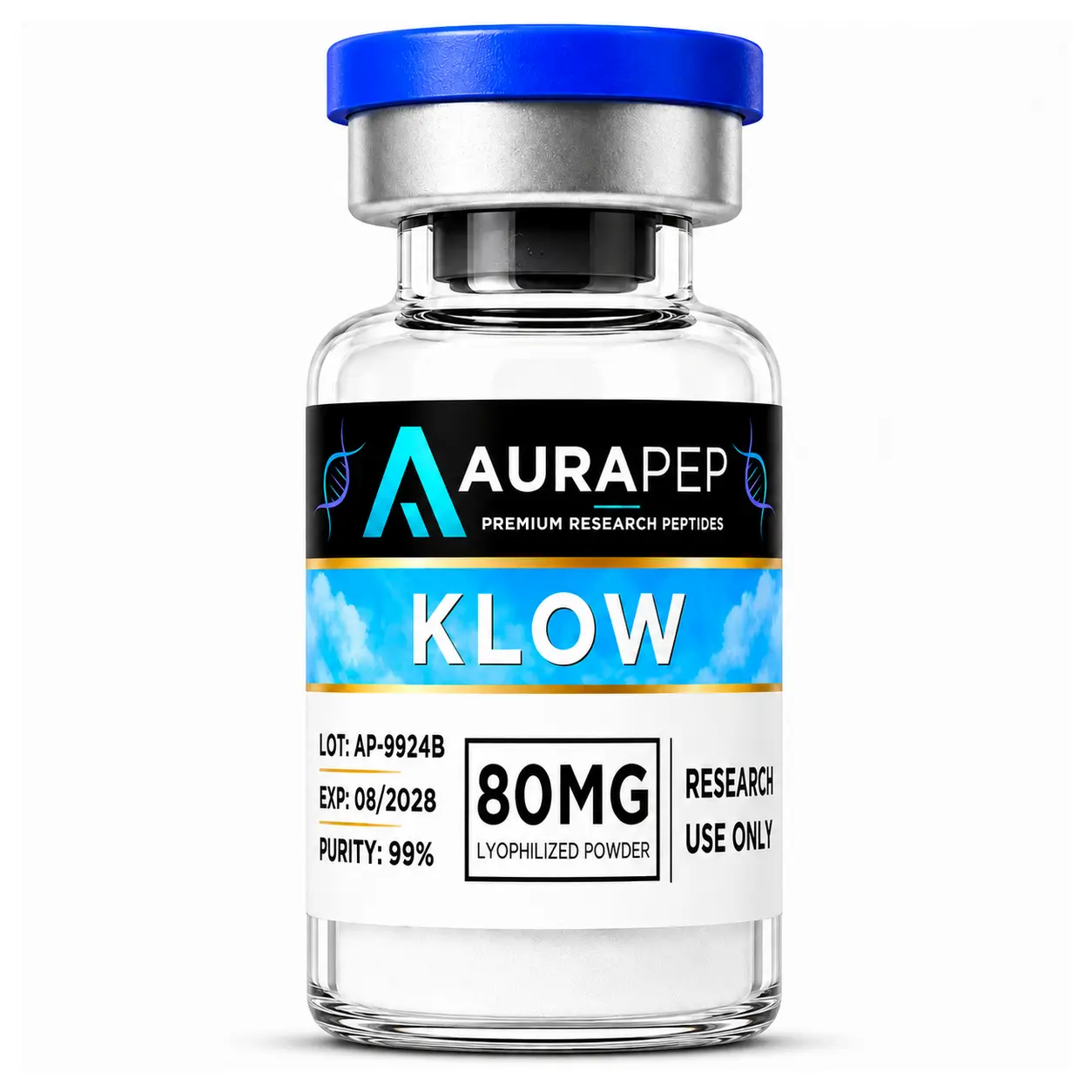
KLOW Blend – 80mg

$139.99

Out of stock

PRODUCT AVAILABILITY

Get notified when it’s in stock

Join this product’s notification list and we’ll email you when it becomes available. No payment or backorder is created.

Product notifications are separate from marketing. Your address is used for this availability request unless you also select site updates.
  • Research focus: Multi-component tissue, matrix and inflammatory-signalling models
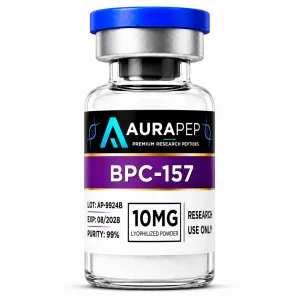
  • Components: BPC-157 10mg, TB-500-related peptide 10mg, GHK-Cu 50mg and KPV 10mg
  • Researchers are exploring: Tissue repair, matrix renewal and inflammatory signalling
Fast Order ProcessingIn-stock orders prepared promptly
Tracking ProvidedEmailed when your order is on its way
Canadian SupportHelp when you need it

RESEARCH AT A GLANCE

A clearer view of the research landscape

01

Primary pathway

Multi-peptide pathway research

02

Researchers explore

complementary tissue-response, matrix and cellular-signalling pathways

03

Research coverage

Component-led preclinical research

BPC157 10mg+TB500 10mg+GHKcu50mg+KPV10mg — 80mg

Product Overview

KLOW is a four-component research blend containing labelled BPC-157, TB-500-related peptide, GHK-Cu and KPV. The mixture brings together compounds studied across tissue-response, cytoskeletal, extracellular-matrix and inflammatory-signalling models.

Component Research Context

BPC-157 is examined in fibroblast and vascular-response models. TB-500-related peptide is associated with actin and cell-migration research. GHK-Cu is studied in copper coordination and matrix signalling. KPV is examined in melanocortin-derived and NF-kappa-B-related experimental systems.

Blend Research Considerations

No inference of synergy should be made from the component list. Mixture experiments require appropriate single-component and vehicle controls, and the combined material should be treated as a separate analytical entity.

In Plain Language

Researchers may use KLOW to study several connected systems together: tissue-response signalling, actin-based cell movement, copper-peptide matrix activity and KPV-related inflammatory pathways. The four components cover different stages of a complex tissue response.

In plain terms, KLOW research may examine how inflammation is regulated, how repair cells migrate, how blood-vessel and fibroblast signals develop and how collagen-rich extracellular matrix is renewed. The blend is most informative when experiments include suitable single-component controls.

Product Specifications

  • Catalogue No.: KLOW80
  • Vial Size: 80mg total

Quality & Documentation

Lot-specific product documentation and Certificate of Analysis (COA) information may be available through AURAPEP where applicable.

Research Use Only

RESEARCH USE ONLY — NOT FOR HUMAN CONSUMPTION. Supplied strictly for laboratory, analytical and research purposes. Not intended for self-administration or to diagnose, treat, cure or prevent any disease.
AURAPEP RESEARCH LIBRARY

Related Research

Explore the scientific background, evidence and limitations associated with this research compound.

Research Library

How to Evaluate a Peptide Research Study

A practical framework for assessing study design, controls, sample size, outcomes, statistics, replication and conflicts of interest.

Research-method fundamentals · 11 minutes

Component-evidence limitation: Research on individual components does not establish the effects, performance or synergy of the combined blend.

Explore the complete Research Library

PRODUCT FAQ

Three common research questions

Explore concise, product-specific answers without leaving this page.

PRODUCT FAQ

KLOW Blend – 80mg

01

What is the KLOW blend and which pathway do researchers study?

The KLOW blend is studied in relation to multi-peptide pathway research. Researchers use it to investigate complementary tissue-response, matrix and cellular-signalling pathways.

02

What are researchers investigating?

The current research landscape includes Component-led preclinical research. Study designs may involve biochemical assays, cell systems, animal models or regulated human research depending on the compound, and results should be interpreted within the limits of each model.

03

Why are these components studied together?

This is a multi-component research blend rather than a single compound. Its components are studied across partly overlapping tissue-response, matrix and cellular-signalling pathways, but the combination should not be assumed to produce proven synergy.

Research information is provided for scientific context. Product supplied for research use only.