FREE TRACKED SHIPPING ON ORDERS OVER $299 $150

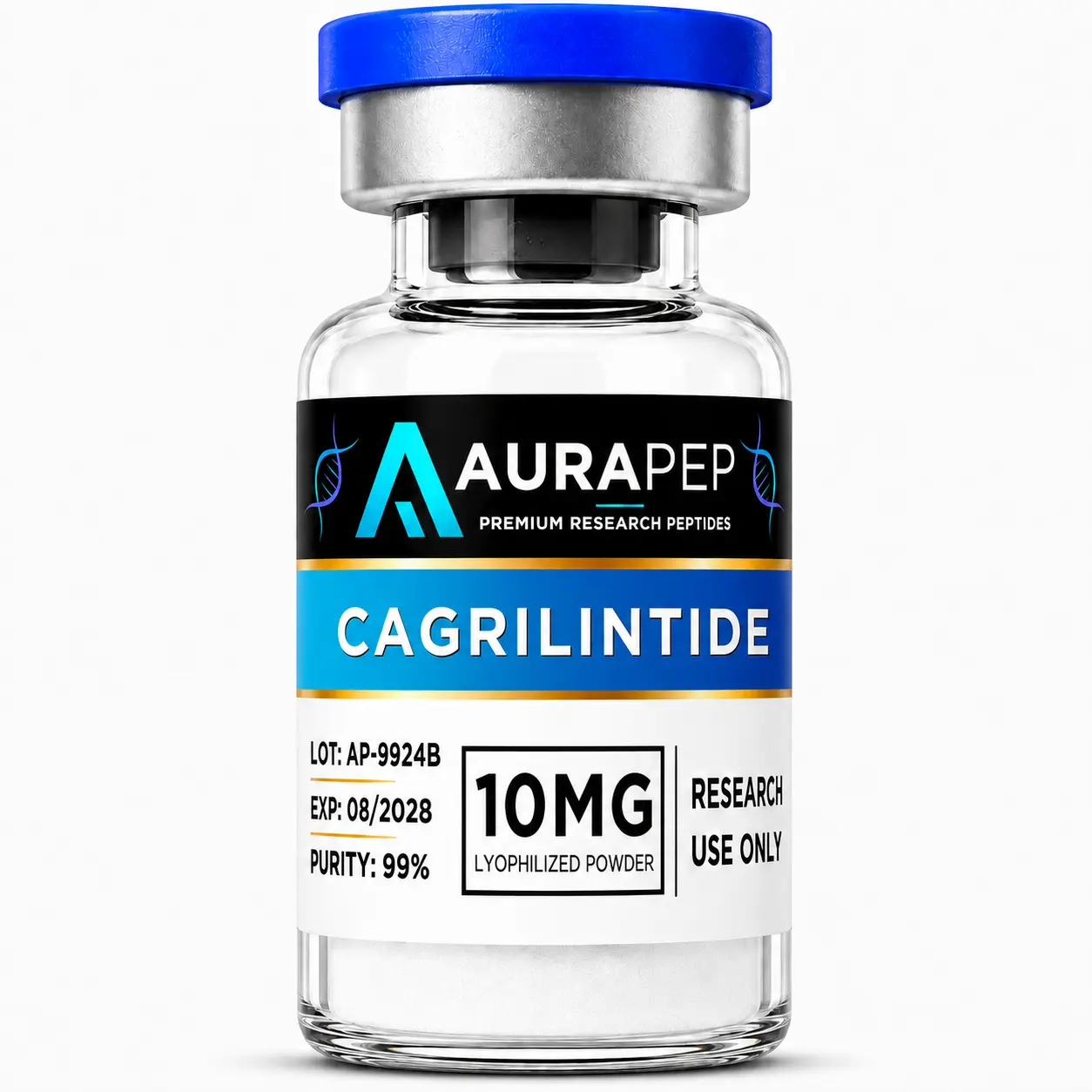
Cagrilintide – 10mg

$129.99

Out of stock

PRODUCT AVAILABILITY

Get notified when it’s in stock

Join this product’s notification list and we’ll email you when it becomes available. No payment or backorder is created.

Product notifications are separate from marketing. Your address is used for this availability request unless you also select site updates.
SKU: CAG-10MG Categories: ,
  • Research focus: Amylin-receptor and metabolic-signalling research
  • Compound class: Long-acting amylin analogue
  • Researchers are exploring: Appetite signalling, food-intake patterns and metabolic regulation
Fast Order ProcessingIn-stock orders prepared promptly
Tracking ProvidedEmailed when your order is on its way
Canadian SupportHelp when you need it

RESEARCH AT A GLANCE

A clearer view of the research landscape

01

Primary pathway

Amylin-receptor signalling

02

Researchers explore

satiety signalling, food-intake pathways and metabolic regulation

03

Research coverage

Clinical and translational research

Cagrilintide — 10mg

Product Overview

Cagrilintide is a synthetic, long-acting analogue of amylin. Amylin is a peptide hormone co-secreted with insulin and studied for its role in nutrient-responsive signalling and communication among pancreatic, gastrointestinal and central pathways.

Research Background

Amylin-family peptides interact with receptor complexes formed from calcitonin receptors and receptor-activity-modifying proteins. Cagrilintide is investigated as a tool for studying sustained amylin-receptor engagement, receptor selectivity and the integration of amylin-related signalling with other metabolic pathways.

Current Areas of Investigation

Research includes receptor pharmacology, peptide half-life engineering, appetite and energy-balance signalling, and studies combining amylin-related pathways with other metabolic signals.

In Plain Language

Researchers are exploring how amylin signalling may influence feelings of fullness, food-intake patterns and the way biological systems coordinate energy balance after eating. Amylin-related signals are also studied for their effects on gastric emptying and communication between the pancreas, digestive system and brain.

In plain terms, cagrilintide research asks whether a longer-acting amylin signal can reduce drive toward food and help explain how fullness signals are maintained over time. Combination studies also examine how this pathway interacts with GLP-1 and other metabolic signals.

Product Specifications

  • Catalogue No.: CAG10
  • Vial Size: 10mg

Quality & Documentation

Lot-specific product documentation and Certificate of Analysis (COA) information may be available through AURAPEP where applicable.

Research Use Only

RESEARCH USE ONLY — NOT FOR HUMAN CONSUMPTION. Supplied strictly for laboratory, analytical and research purposes. Not intended for self-administration or to diagnose, treat, cure or prevent any disease.
AURAPEP RESEARCH LIBRARY

Related Research

Explore the scientific background, evidence and limitations associated with this research compound.

Compound & Pathway Profiles

Amylin, GLP-1 and Combination Metabolic Research

Why amylin and GLP-1 pathways are studied together, what combination trials can show, and why evidence cannot be transferred between molecules or blends.

Mixed or emerging evidence · 8 minutes

Explore the complete Research Library

PRODUCT FAQ

Three common research questions

Explore concise, product-specific answers without leaving this page.

PRODUCT FAQ

Cagrilintide – 10mg

01

What is Cagrilintide and which pathway do researchers study?

Cagrilintide is studied in relation to amylin-receptor signalling. Researchers use it to investigate satiety signalling, food-intake pathways and metabolic regulation.

02

What are researchers investigating?

The current research landscape includes Clinical and translational research. Study designs may involve biochemical assays, cell systems, animal models or regulated human research depending on the compound, and results should be interpreted within the limits of each model.

03

How does it differ from related research compounds?

Cagrilintide is an amylin analogue and is therefore studied through a different primary pathway from GLP-1-based compounds. Researchers may compare these systems because both participate in nutrient and satiety signalling through distinct receptors.

Research information is provided for scientific context. Product supplied for research use only.